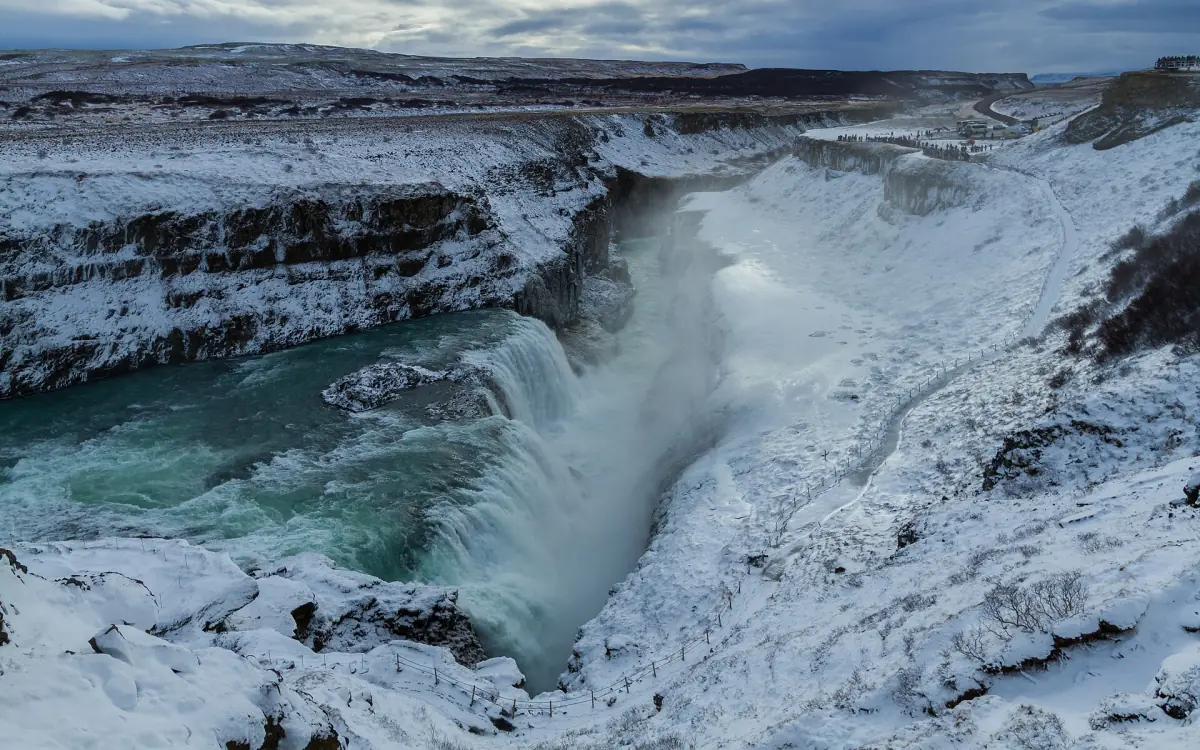
February at a glance
February keeps the cold, the snow and the dark nights of January, but the days stretch quickly. In Reykjavík the sun rises at 10:08 and sets at 17:15 on 1 February, which gives 7 hours and 7 minutes of daylight. By 15 February it rises at 09:23 and sets at 18:01, so you have 8 hours and 38 minutes. That is enough for a full Golden Circle day without driving in the dark for most of it.
The month suits a first winter trip: snow scenery in the south, a city break with a festival, lagoon and pool time and nights for the northern lights. It still brings wind, ice and sudden road closures, so keep the plan loose.
February weather and daylight
Typical averages for 1991–2020, rounded, with January and March for comparison. They describe two weather stations, not a given day.
| Month | Reykjavík high / low | Reykjavík precipitation | Akureyri high / low | Daylight on 15th | Foreign departures 2025 |
|---|---|---|---|---|---|
| January | 3 / −2 °C | about 87 mm | 3 / −4 °C | 5 h 25 min | about 122,000 |
| February | 3 / −2 °C | about 91 mm | 3 / −4 °C | 8 h 38 min | about 149,000 |
| March | 4 / −1 °C | about 81 mm | 4 / −3 °C | 11 h 42 min | about 152,000 |
Both stations have average night lows below freezing in February, and Akureyri sees the lower values, with an average around −4 °C and only about 52 mm of precipitation. Averages hide the swings. A mild, wet day can be followed by a hard freeze, which turns wet roads and paths to ice. Pack waterproof layers and shoes with grip.
Our picks for February
Northern lights by bus or boat and the Katla ice cave by super jeep.
Hand-picked tours, booked through GetYourGuide. Prices are indicative starting prices in euros (as of October 2026). Tap a tour for live availability and the current price in your currency.
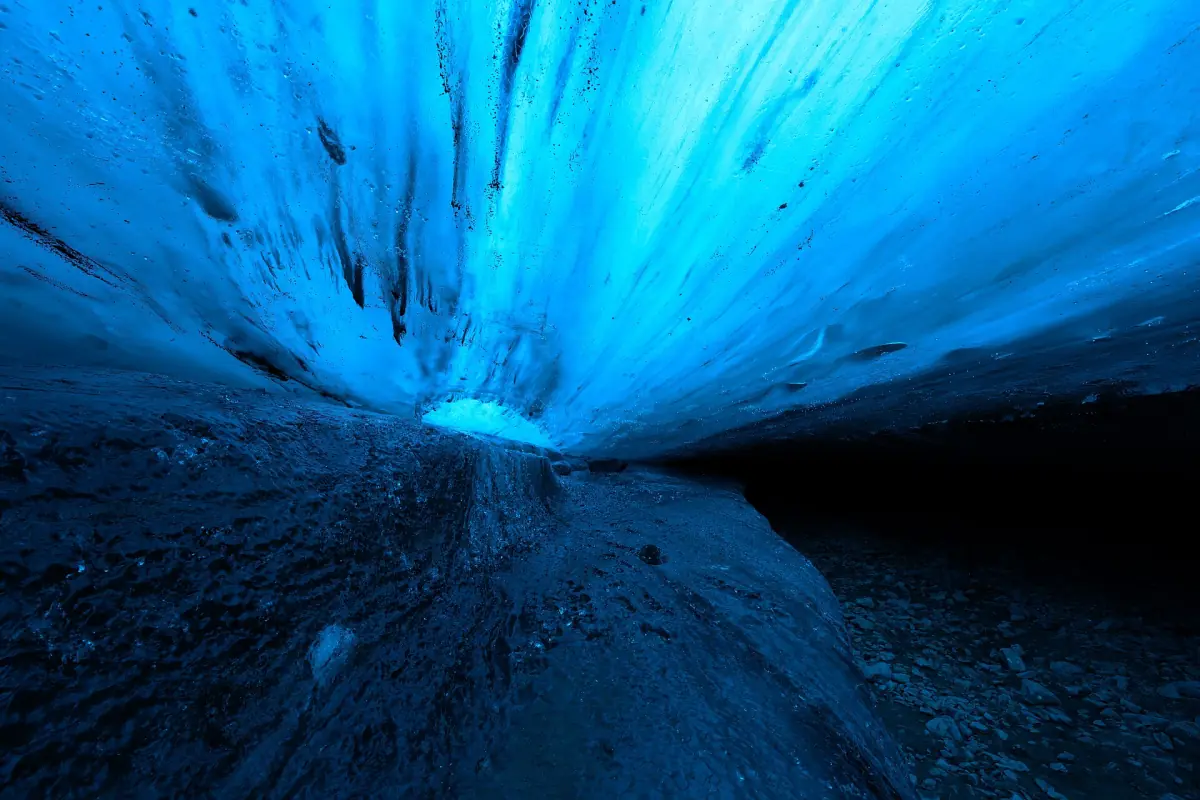
Katla ice cave by super jeep from Vík
A super jeep from Vík, a guided cave visit, crampons and a helmet. The cave changes with the weather, and food and drinks are extra.
Check availability →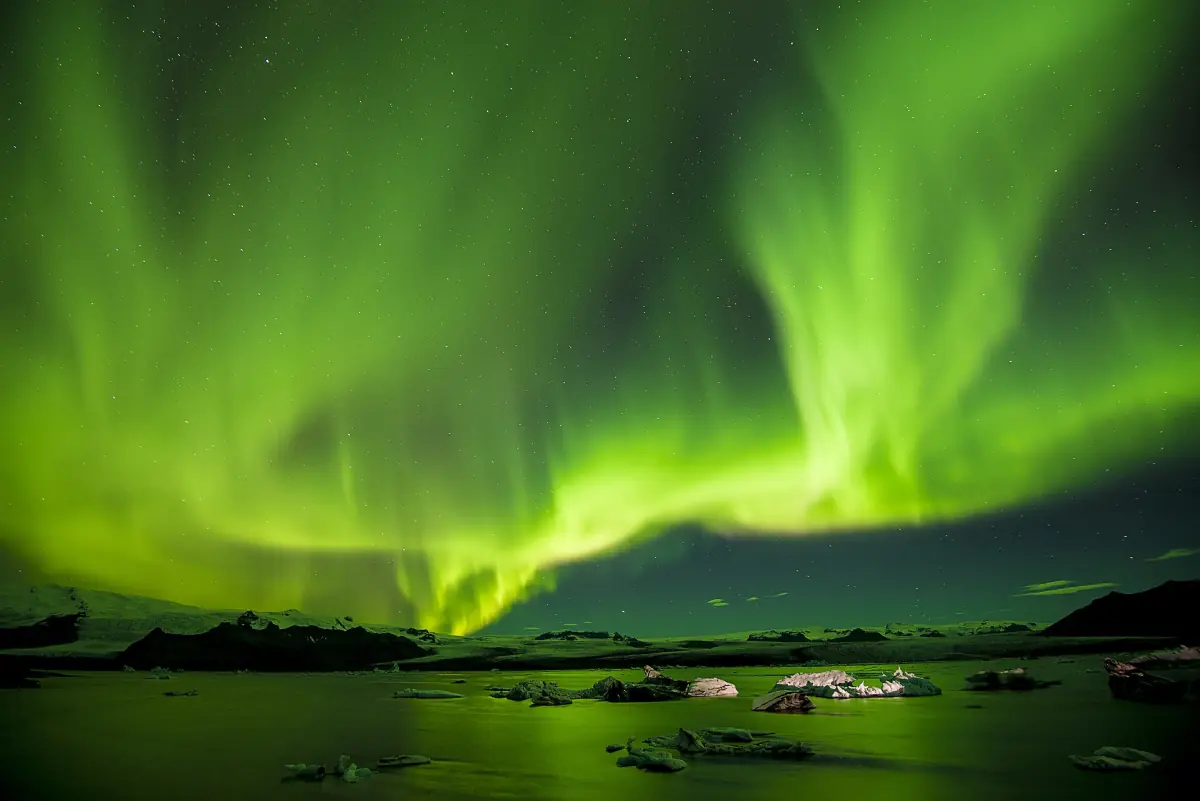
Northern lights cruise from the old harbor
A two-hour yacht trip with Wi-Fi, blankets and seasickness tablets. Drinks and souvenirs are extra, hotel pickup comes only with the matching option, and a sighting is not guaranteed.
Check availability →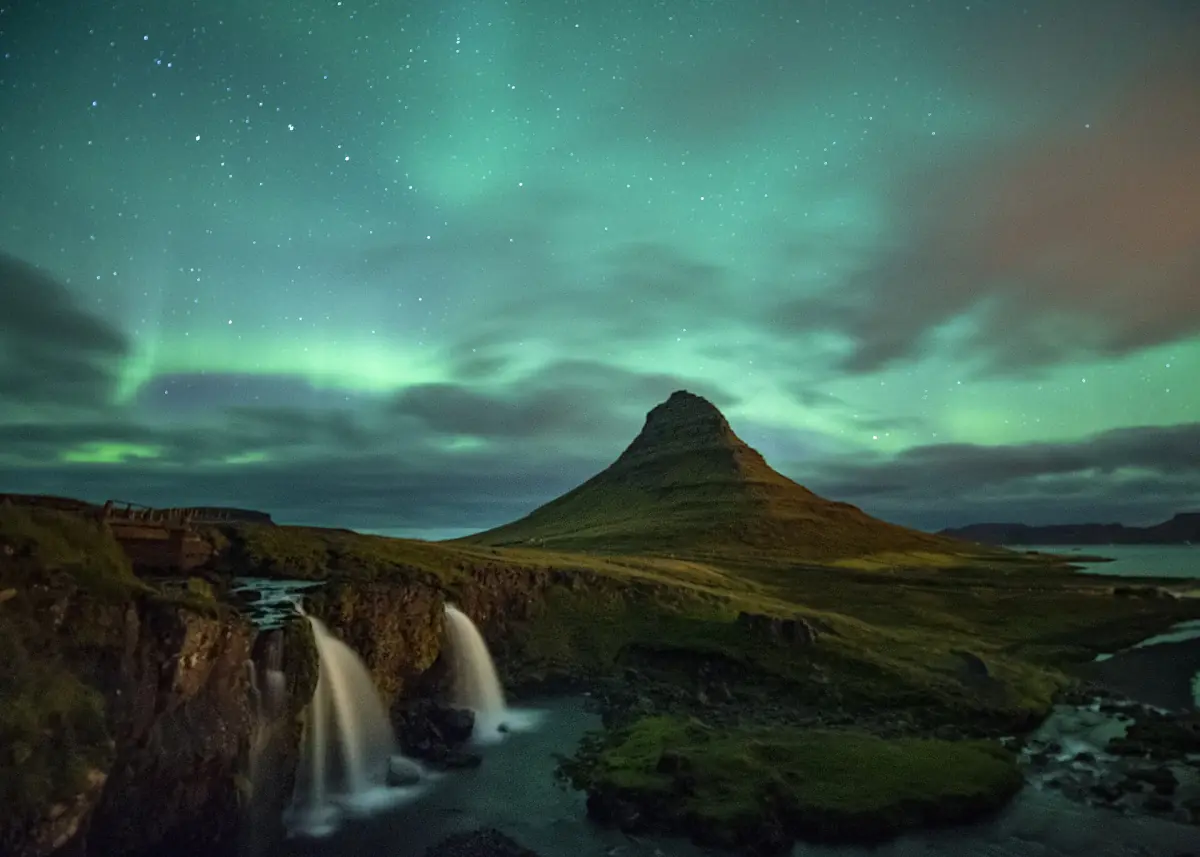
Northern lights bus tour with hot cocoa
A guide, transport, hot cocoa and photo stops, with a free repeat if no lights show. It runs in the winter months and depends on the weather, so a sighting is not guaranteed.
Check availability →Iceland tours in February
Golden Circle and South Coast day trips, northern lights tours and lagoon visits from Reykjavík, with live prices and availability.
Winter Lights Festival in Reykjavík
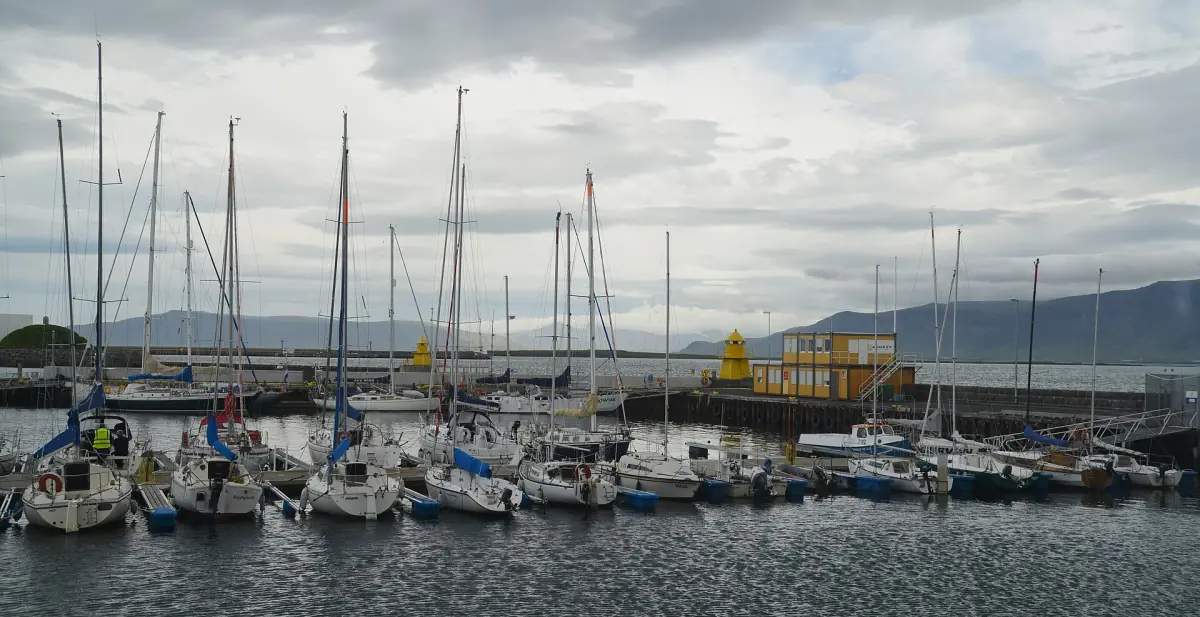
The Winter Lights Festival is Reykjavík's February event, built around light in the darkest part of the year. In 2026 the festival opened on 5 February at 19:00. Museum Night followed on 6 February from 18:00 to 23:00, and Pool Night on 7 February from 17:00 to 21:00. The festival events named in the program were free. That does not mean museums and pools are free all year, and the dates move from year to year, so check the program for your own dates.
The city also puts the season to use for Þorrablót, the traditional midwinter feasts. The old month of Þorri ends between 18 and 24 February, and there is no single national date. Our Reykjavík guide covers the city in more detail.
What works well in February
These are the activities that suit the month. Opening hours and conditions can change at short notice.
Golden Circle in the snow
The loop from Reykjavík to Þingvellir, Geysir and Gullfoss is about 250 km and works all year. In winter the lower viewing paths at Gullfoss can be closed when there is ice or snow, and at Geysir you should stay on the marked paths. Parking at Þingvellir costs 1,000 ISK for a car with up to 5 seats (2026, valid for the day at P1, P2 and P5). The Heart of Iceland exhibition costs 1,200 ISK for adults, 600 ISK for seniors and students from 18, and is free under 18. See the Golden Circle guide.
Pools
Reykjavík's municipal pools charge 1,500 ISK for adults and 400 ISK for ages 10 to 17 under the tariff valid from 5 May 2026. Children aged 0 to 9 enter free with an adult. Towel hire is 860 ISK, swimwear hire is 1,270 ISK, and the package with entry, towel and swimwear is 2,770 ISK.
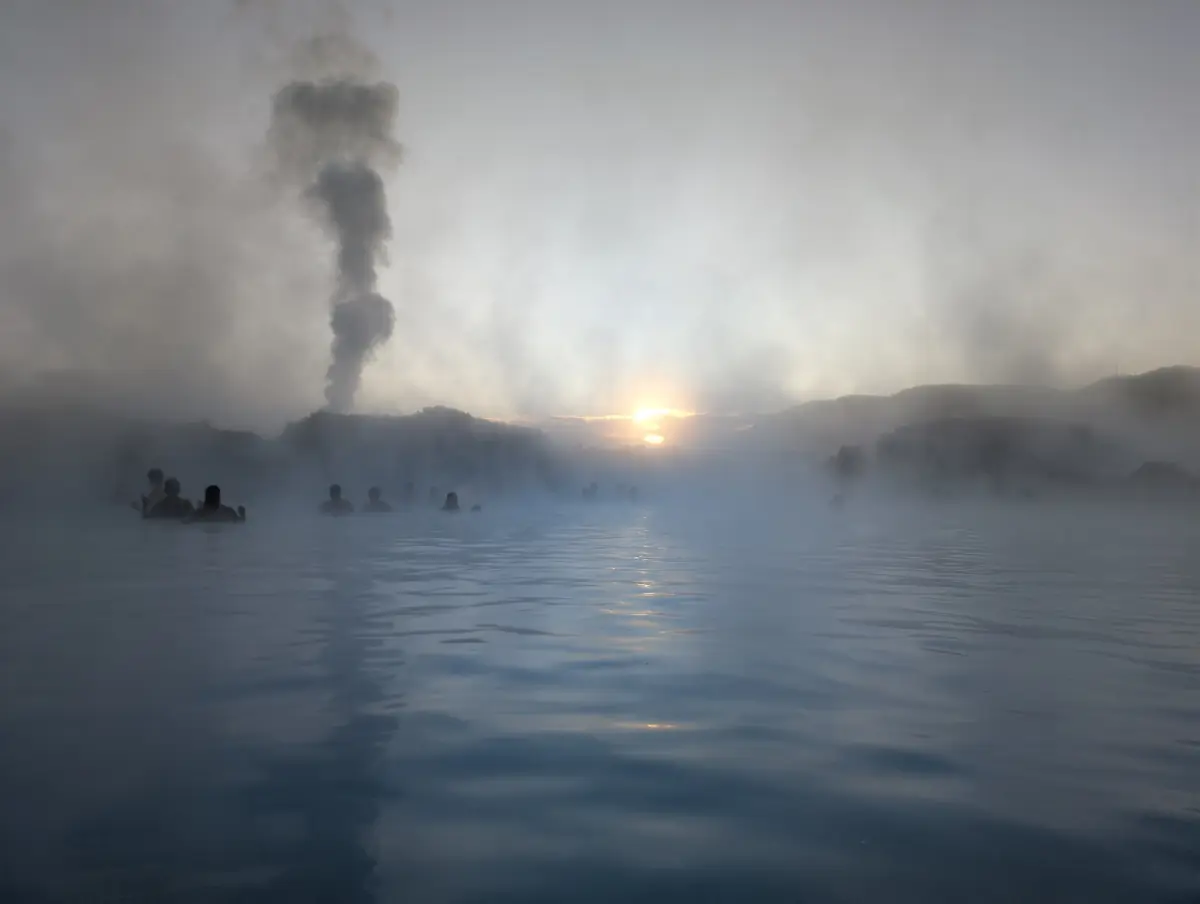
Blue Lagoon
The published hours from 1 January to 31 May are 08:00 to 20:00, and you leave the water 30 minutes before closing. Pre-booking is needed. The 2026 price card lists Comfort from 11,990 ISK, Premium from 14,990 ISK and Signature from 18,490 ISK, and prices change by date. The main access is the Grindavíkurvegur road, number 43, and the operator warns about out-of-date app routes. See the lagoon guide.
Northern lights
February is still inside the season, and the earlier sunset gives you darker evenings than in spring. You need dark and at least partly clear skies. Nothing is guaranteed. See the northern lights guide.
Reykjanes and the Blue Lagoon
The Reykjanes peninsula between the airport and the Blue Lagoon has been volcanically active. The Icelandic Met Office report of 30 September 2026 describes slow uplift near Svartsengi and low seismic activity. It names a further movement of magma towards Sundhnúkur as the most likely development, and it states that the timing of an eruption cannot be predicted. Grindavík stays at orange level in that report. Conditions can change quickly, so check current notices from the Met Office and the operator before you travel and keep a flexible plan for the day.
Driving in February
Winter driving rules apply all month. Slippery roads, wind and short daylight hours need time buffers. Four-wheel drive does not stop a car from sliding, and tires and equipment must suit the route. Highland roads are not open for normal summer access. Before each drive check umferdin.is, safetravel.is and the Icelandic Met Office (en.vedur.is). An orange weather warning means considerable possible impact on traffic and infrastructure, so treat it as a reason to change the plan. More in our road conditions guide.
Crowds and prices
February 2025 saw about 149,000 foreign departures through Keflavík, more than January and about the same as March (152,000) and April (149,000). It is still far below June (234,000) and July (302,000). Lower visitor numbers do not prove a fixed saving, and there is no price forecast for 2027 here. Hotels and guesthouses add a lodging tax of 800 ISK per room and night. Read the cheapest time to visit Iceland page for how seasons differ.
Plan the rest of your trip
Go back to Iceland in January or ahead to Iceland in March. The winter overview compares the whole season.
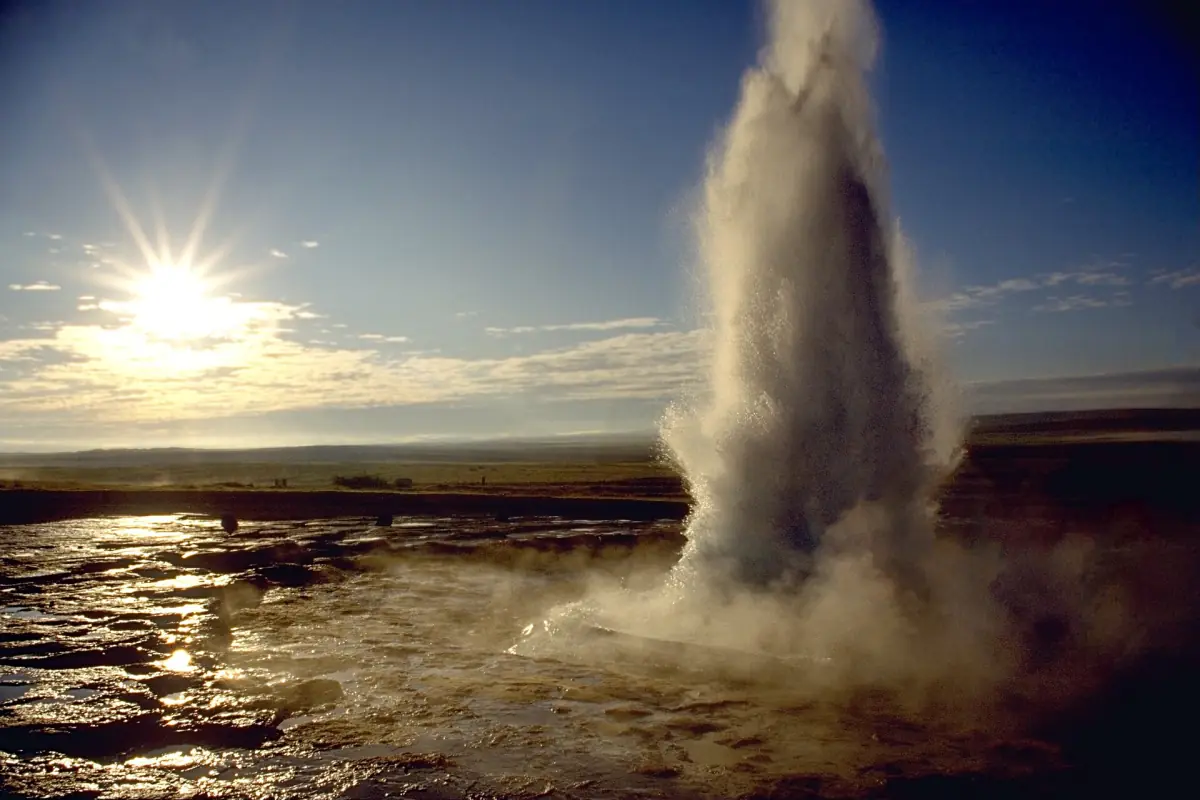
Golden Circle in all seasons
Þingvellir, Geysir and Gullfoss, and how winter changes the stops.
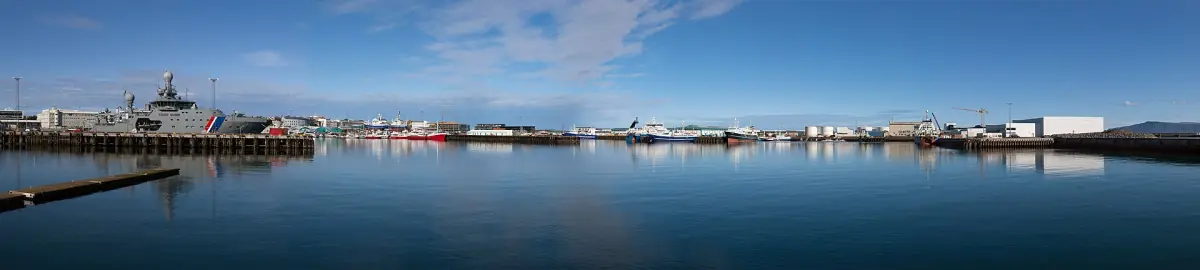
Reykjavík: church, pools and day trips
Hallgrímskirkja, municipal pools and the trips that start from the city.
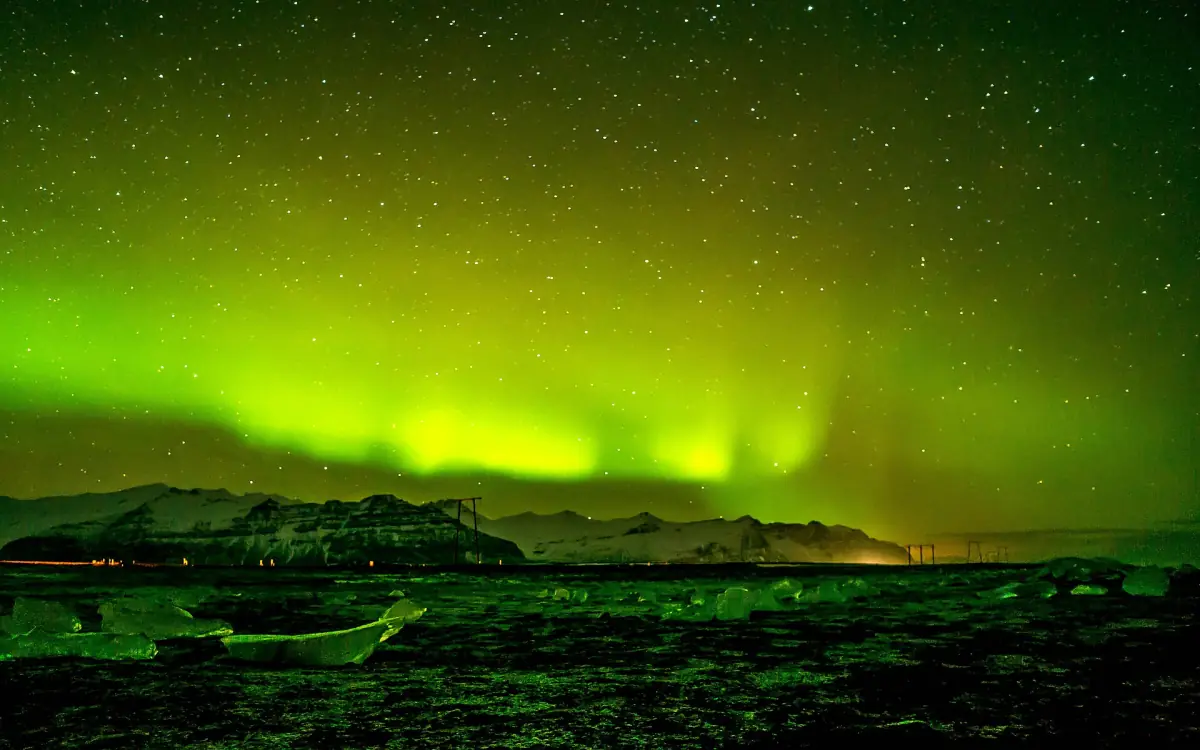
Best time to see the northern lights
Season, conditions and what a tour does and does not promise.
Iceland in February: frequently asked questions
Is February a good month to visit Iceland?
It works well for a winter trip with a city stay, snowy day trips and northern lights. Days are longer than in January, but wind, ice and short closures remain. Keep spare days.
How much daylight is there in February?
In Reykjavík 7 hours and 7 minutes on 1 February and 8 hours and 38 minutes on 15 February, measured from sunrise to sunset for 2026.
What is the weather like in February?
Reykjavík typically sees highs around 3 °C (37 °F) and lows around −2 °C (28 °F). Akureyri is colder at night, with lows around −4 °C. Rain, wet snow and wind are common.
When is the Winter Lights Festival?
In 2026 it opened on 5 February, with Museum Night on 6 February and Pool Night on 7 February. Dates change by year, so check the program for your trip.
Is the Blue Lagoon open in February?
Its published hours from 1 January to 31 May are 08:00 to 20:00, and pre-booking is needed. Check the current operating status before you go, because volcanic and weather conditions can change it.
Can I see the northern lights in February?
February is inside the season, and nights are still long. Clear skies decide, and no tour can promise a sighting. Allow several evenings.